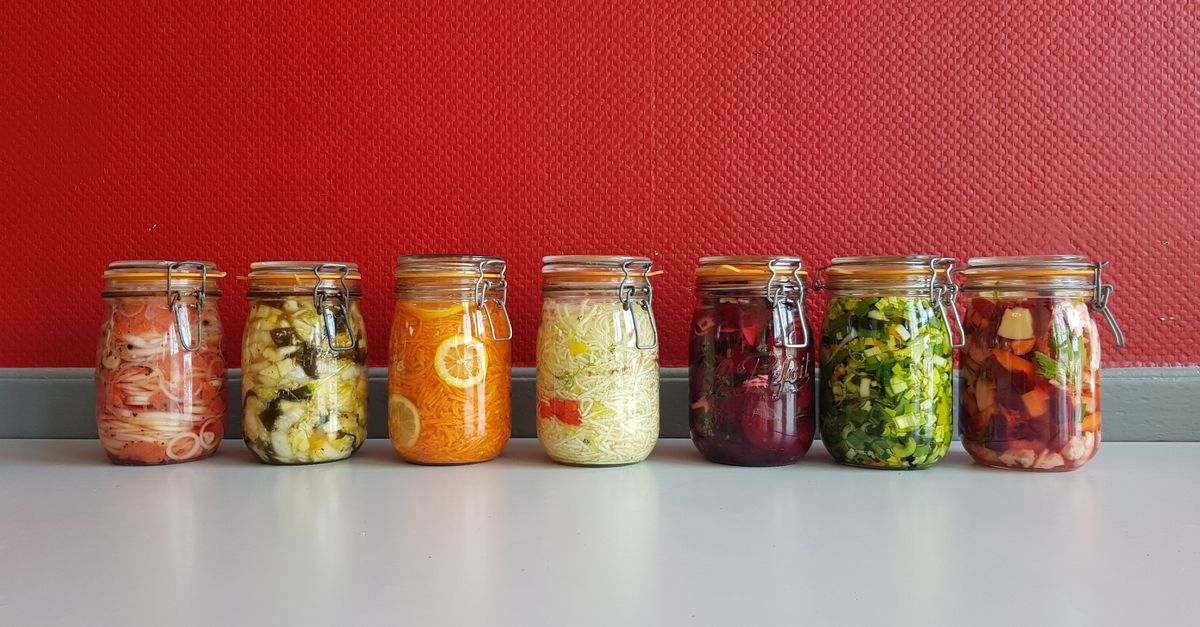
Have you ever excitedly jarred a batch of vibrant vegetables, anticipating a tangy, probiotic-rich masterpiece, only to open it days later to a slimy, moldy, or just plain off concoction? You’re not alone. I’ve been there more times than I care to admit. The promise of homemade fermented foods — with their incredible flavor, gut-boosting benefits, and minimal effort — often collides with the harsh reality of beginner mistakes. It feels like such a simple process: salt, water, vegetables, time. Yet, the internet is littered with frustrated accounts of failed ferments. The truth is, while the core concept is simple, the devil is in the details. What seems like minor oversight can quickly lead to an unappetizing (or even unsafe) result.
After years of experimenting, countless batches of kraut, kimchi, and pickled delights, and a few truly disastrous attempts, I’ve pinpointed the common pitfalls that trip up most new fermenters. It’s not about complex equipment or secret ingredients; it’s about understanding the basic biology and respecting the process. What changed everything for me was realizing that many popular beginner guides gloss over crucial elements, leading to a false sense of security and inevitable failure. Let’s dig into why your ferments might be falling short and, more importantly, what you can do to turn that around.
Key Takeaways
- Insufficient salt concentration is the leading cause of spoilage, not just an off-flavor.
- Maintaining an anaerobic environment is non-negotiable for preventing mold and off-flavors.
- Starting with quality, pesticide-free produce makes a significant difference to success rates.
- Temperature control is critical; extreme heat or cold will halt or alter fermentation unfavorably.
The Insidious Salt Problem: Not Enough (Or The Wrong Kind)
When I first started, I thought salt was just for flavor. My initial batches were often too bland or, worse, developed a fuzzy white mold on top. The mistake I see most often, and one I made myself for too long, is underestimating the role of salt. It’s not just a seasoning; it’s the gatekeeper. Salt creates the environment where beneficial lactic acid bacteria (LAB) thrive and pathogenic bacteria are suppressed. Without enough salt, you’re essentially hosting an open house for all bacteria, good and bad, and the bad ones often win the race.
Most recipes will give you a range, often 2-3% by weight of vegetables. I used to eyeball it or use slightly less, thinking I was being healthier. Big mistake. My recommendation for beginners is to stick to the higher end of the 2-3% range, especially when you’re just starting out. For context, this means for every 1000 grams (1 kg or about 2.2 lbs) of vegetables, you’d use 20-30 grams of non-iodized salt. That’s about 1.5 to 2 tablespoons. Iodine and anti-caking agents in regular table salt can inhibit the bacteria, so always opt for pure sea salt, pickling salt, or kosher salt without additives.
Another common error is not distributing the salt evenly. If you’re dry-salting something like sauerkraut, make sure every shred of cabbage is thoroughly massaged with salt until it releases its brine. If you’re using a brine solution for whole vegetables, ensure the salt is fully dissolved before pouring it over your produce. Don’t just dump salt into the jar and hope for the best; it will stratify, creating uneven salinity and leading to localized spoilage. Take the time to measure precisely and mix thoroughly. It’s a small step that yields huge returns.
The Oxygen Trap: Why Air is Your Enemy
I vividly remember the disappointment of opening a jar of what I hoped would be kimchi, only to find a vibrant green mold creeping across the surface. My first thought was, “What went wrong with the recipe?” The recipe was fine; my understanding of the environment was flawed. Lactic acid fermentation is an anaerobic process. This means the beneficial bacteria you want to cultivate thrive in the absence of oxygen. Mold, on the other hand, absolutely loves oxygen. Exposing your ferment to air is essentially an invitation for spoilage.
The most common way beginners introduce oxygen is by not keeping the vegetables fully submerged under the brine. Floating bits are mold magnets. This is where fermentation weights become your best friend. A simple glass weight placed on top of your vegetables, ensuring everything stays under the liquid, makes an enormous difference. If you don’t have a specific fermentation weight, you can use a small, clean, sterile glass jar filled with water, or even a ziplock bag filled with brine (in case it punctures) placed inside the fermentation vessel. The key is consistent submersion.
Furthermore, using an airlock lid, while not strictly necessary for every ferment, can significantly improve your success rate, especially in warmer environments or for longer ferments. An airlock allows the CO2 produced during fermentation to escape without letting fresh oxygen in. While a simple lid screwed on loosely (or ‘burped’ daily) can work, airlocks provide a much more consistent anaerobic environment, minimizing the risk of oxidation and mold growth. Invest in a few cheap airlocks and lids; they’ll pay for themselves in successful ferments.
Produce Predicaments: The Quality and Preparation Factor
Early on, I’d grab whatever vegetables were on sale, thinking, “It’s just fermentation, everything gets transformed, right?” Wrong. While fermentation does transform ingredients, it doesn’t miraculously fix subpar starting material. In fact, it often highlights the flaws. My batches were sometimes oddly textured or tasted a bit ‘off’ despite everything else seeming correct. The realization came that the quality and preparation of the produce are foundational.
First, choose fresh, firm, high-quality produce. Wilted, bruised, or old vegetables will not ferment as successfully. Their cell walls are weaker, leading to mushy textures, and they may harbor different microbial communities than fresh produce, which can throw off the delicate balance. I now prioritize farmer’s market finds or my own garden bounty. Pesticides and herbicides can also inhibit the growth of beneficial bacteria, so opting for organic or unsprayed produce significantly increases your chances of success. You’re trying to cultivate a vibrant microbial ecosystem; you don’t want to start with a chemically compromised environment.
Second, proper cleaning and preparation are crucial. While you don’t want to sterilize your vegetables (you need those wild bacteria!), a good rinse to remove dirt and debris is essential. Avoid using chlorinated tap water for your brine if possible; chlorine can inhibit beneficial bacteria. Filtered water or spring water is ideal. When chopping, aim for consistent sizes. This ensures an even fermentation rate. For example, uniformly shredded cabbage will ferment more predictably than a mix of large chunks and fine shreds. Pay attention to how the recipe recommends cutting the vegetables; it’s often for a good reason related to surface area and brine penetration.
The Temperature Tango: Too Hot, Too Cold, Just Right
I once had a batch of dill pickles that fermented so rapidly they became almost carbonated and extremely sour in just a few days, completely missing the nuanced flavor I was aiming for. Another time, my sauerkraut sat for weeks with no bubbling, no activity, just still cabbage. The culprit in both cases? Temperature. It’s a variable many beginners overlook, assuming room temperature is a universal constant. But what constitutes ‘room temperature’ can vary widely, and these variations significantly impact fermentation speed and flavor development.
Lactic acid bacteria are happiest and most active in a specific temperature range, typically between 65°F and 75°F (18°C and 24°C). When it’s too warm, fermentation can race, producing a strong, sometimes harsh, sour flavor, and increasing the risk of spoilage as undesirable organisms also thrive in heat. My overly sour pickles were a victim of a particularly warm summer week. Conversely, when it’s too cold (below 60°F/15°C), fermentation slows dramatically, or even stalls completely, which is what happened to my sluggish sauerkraut in a cool pantry. While colder temperatures can result in more complex flavors over a longer period, beginners often mistake slow activity for failure.
My advice is to find a consistent spot in your home that stays within that ideal temperature range. For me, it’s a specific corner of the kitchen counter away from direct sunlight and heat sources in the summer, and closer to an interior wall in the winter. If your home fluctuates wildly, consider investing in a seedling heat mat with a thermostat for cooler months, or finding a cooler spot like a basement or an insulated cupboard during heatwaves. Monitoring the ambient temperature, even with a cheap thermometer, can save you a lot of grief and ensure more predictable, delicious results.
Impatience and Over-Interference: Let It Be
One of the hardest lessons I learned was to simply leave my ferments alone. My initial excitement often led me to ‘check’ on them constantly – opening the lid, poking the vegetables, stirring the brine. Each time, I was unknowingly inviting trouble. What I thought was monitoring was actually interfering with the delicate anaerobic environment I was trying to create, often leading to mold or halting the process.
Fermentation requires patience. Once you’ve set up your jar correctly – with sufficient salt, submerged vegetables, and an airlock or tightly sealed lid – the best thing you can do is find a suitable spot and walk away for a few days. Resist the urge to open it every few hours. The bubbling, the cloudiness, the changing color – these are all normal signs of life. Trust the process. The only time you should intervene is if you see obvious mold (fuzzy, colored growth, not just white kahm yeast which is usually benign but can be skimmed off) or if there’s an unmistakably foul odor.
For most vegetable ferments, a good starting point is to let them go for at least 5-7 days at optimal temperatures before even thinking about tasting. Some, like sauerkraut, benefit from weeks or even months. The longer it ferments, the more complex the flavors become, and the more beneficial acids are produced. My rule of thumb now is: set it, forget it for a week, then taste. If it’s not where I want it, I reseal it and let it go longer. This hands-off approach, once mastered, is incredibly liberating and leads to far more consistent, successful ferments.
Frequently Asked Questions
Q1: Is the white film on top of my ferment mold? What is Kahm yeast?
A: Not necessarily! A white, powdery or slightly bubbly film that smells yeasty or benign is often Kahm yeast, which is harmless, though it can impart an off-flavor if left too long. Mold, on the other hand, typically appears fuzzy, often has distinct colors (green, black, pink), and can smell musty or distinctly unpleasant. If it’s Kahm yeast, you can usually just scrape it off the surface with a clean spoon. If it’s mold, unfortunately, it’s best to discard the entire batch to be safe, as mold often has invisible roots extending into the food.
Q2: My vegetables turned mushy. What went wrong?
A: Mushy vegetables are a common issue! The primary culprits are usually too low salt concentration, over-fermentation (letting it go too long, especially in warm temperatures), or starting with produce that wasn’t fresh enough. Using vegetables that are naturally lower in pectin (like cucumbers) can also contribute. Ensuring adequate salt, monitoring fermentation time, and choosing firm, fresh produce will help maintain crispness.
Q3: How do I know when my fermented vegetables are ‘done’?
A: There’s no single ‘done’ point; it’s mostly a matter of taste preference. Generally, ferments are considered ready when they achieve a pleasant tanginess, desired texture, and active bubbling has subsided. For beginners, a good starting point is 5-7 days. Taste a small piece; if it’s pleasantly sour and firm, it’s ready for refrigeration. Longer ferments will be more sour and complex.
Q4: Can I use tap water for my brine?
A: It’s best to avoid unpurified tap water if it contains chlorine or chloramines, as these can inhibit the beneficial lactic acid bacteria you want to cultivate. If you only have tap water, you can boil it for 15-20 minutes and let it cool completely to dissipate the chlorine, or leave it exposed to air in an open container overnight. Filtered or spring water is a safer bet.
Q5: What kind of salt should I use for fermenting?
A: Always use pure, non-iodized salt without anti-caking agents. Good options include sea salt, pickling salt, or kosher salt. Iodine can inhibit bacterial growth, and anti-caking agents can make your brine cloudy. The purity of the salt is more important than the specific type, as long as it’s just sodium chloride.
Learning to ferment vegetables successfully is a journey that, like many rewarding kitchen endeavors, requires a bit of patience and a keen eye for detail. The initial frustrations I faced, and that many beginners experience, stemmed from overlooking the seemingly small details of salt, oxygen, produce quality, and temperature. Once I started respecting these fundamental principles, my success rate skyrocketed, and the joy of creating vibrant, living foods became a consistent reality. Don’t let a few failed batches deter you. Revisit your process, pay attention to these key areas, and you’ll soon be enjoying delicious, probiotic-rich ferments that are truly worth the effort. Now, go forth, measure your salt, submerge those veggies, and let the beneficial bacteria do their magic!