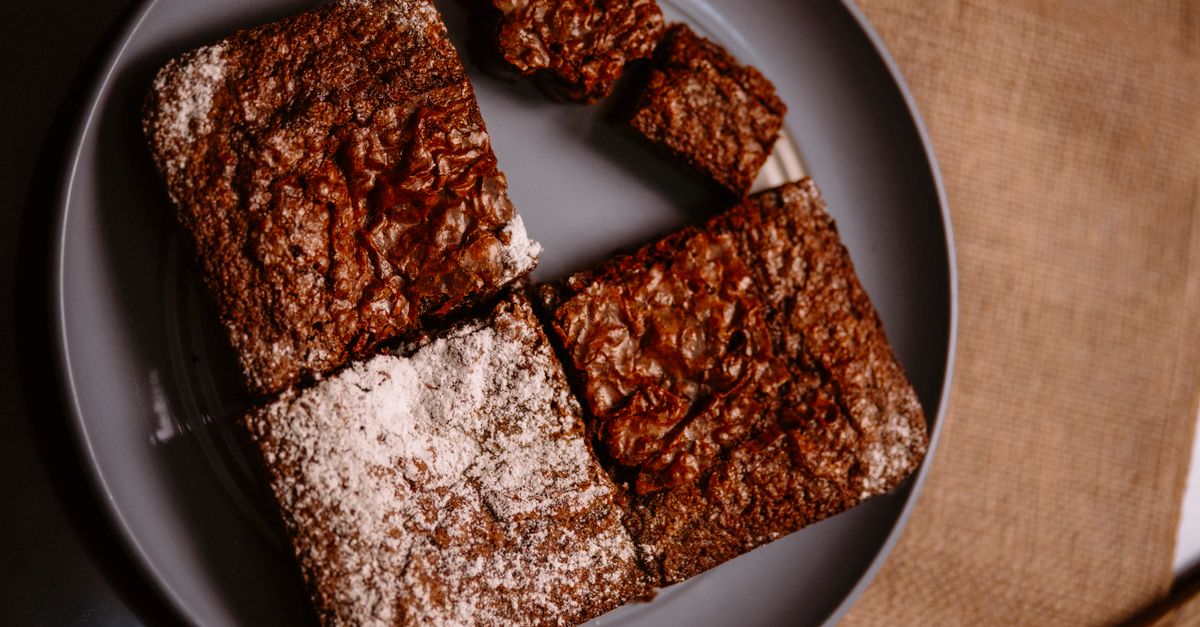
Every home baker knows the disappointment: you pull a tray of brownies from the oven, anticipating that dense, chewy, almost gooey fudginess, only to find them dry, crumbly, or, worst of all, alarmingly cake-like. It’s a common frustration, and in my years of baking and troubleshooting countless brownie batches, I’ve found that the culprits are almost always the same few, subtle missteps. It’s rarely about a complex, secret ingredient; it’s about understanding the delicate balance of fat, sugar, flour, and eggs, and how each interacts with heat.
I’ve been there – meticulously following a recipe only to end up with brownies that were perfectly edible but utterly devoid of that signature fudgy texture. What changed everything for me wasn’t a new recipe, but a deeper understanding of the science behind what makes a brownie a brownie, and not just a flat piece of chocolate cake. It comes down to prioritizing moisture and controlling gluten development, two things often misunderstood in home baking. This isn’t about shaming your past brownie attempts, but about empowering you with the knowledge to consistently achieve the fudgy, chewy, intensely chocolatey results you crave.
Key Takeaways
- Prioritize fat and sugar over excessive flour to achieve a dense, fudgy texture rather than a cake-like crumb.
- Avoid overmixing the batter at all costs to prevent gluten development, which leads to tough, dry brownies.
- Underbaking slightly is key to retaining moisture and ensuring a gooey center that sets to a perfect fudgy chew.
- Understand your oven’s true temperature, as even small discrepancies can drastically alter your brownie’s final texture.
The Flour-to-Fat Ratio: Where Most Brownies Go Wrong
The biggest mistake I see home bakers make, and one I certainly made for years, is giving too much power to flour. In the quest for a fudgy brownie, flour is the enemy of density. Many recipes, especially older ones, call for a higher proportion of flour, which is fantastic if you’re aiming for a cake, but disastrous for fudginess. Flour contains gluten, and more flour means more gluten development, especially when combined with liquid and agitation. This leads to a structured, airy crumb – exactly what you want in a cake, but the opposite of a dense, chewy brownie.
What changed everything for me was drastically reducing the flour content and instead relying on a higher ratio of fat (butter, oil) and sugar. Think about it: cakes are light and airy because of flour and leavening; fudgy brownies are dense because they’re essentially a solidified chocolate ganache with just enough flour to hold it together. My go-to fudge brownie ratio now aims for approximately 1 part flour to 1.5-2 parts fat/sugar combined. For example, if a recipe calls for 1 cup (120g) of all-purpose flour, I’ll often reduce it to 3/4 cup (90g) and compensate with slightly more melted butter or even an extra egg yolk for richness and moisture. The result is a batter that might seem slightly looser than you’re used to, but it bakes down into an incredibly dense and rich brownie. Remember, we’re making something closer to a firm chocolate truffle than a sponge cake.
The Overmixing Menace: How Gluten Steals Your Fudginess
Once you’ve nailed the ingredient ratios, the next critical step is how you handle the batter. Overmixing is perhaps the most insidious foe of a truly fudgy brownie. As soon as flour comes into contact with liquid, gluten begins to form. The more you mix, the more those gluten strands develop, creating a strong, elastic network. While this is essential for the structure of bread and cakes, it spells disaster for brownies, leading to a tough, dry, and distinctly cakey texture. You want just enough gluten developed to hold the brownie together, not to give it spring and chew.
My strategy to combat overmixing is two-fold. First, I always add the dry ingredients to the wet ingredients last. After all the butter, sugar, eggs, and chocolate are perfectly combined, I gently fold in the flour mixture (flour, cocoa powder, salt, leavening if any) with a spatula, not an electric mixer. Second, and crucially, I stop mixing the moment I see no visible streaks of dry flour. Seriously, that’s it. It’s okay if there are a few tiny lumps; they will disappear during baking and won’t affect the texture. In my experience, mixing for literally 10-15 seconds too long can be the difference between a gloriously fudgy brownie and a disappointing cake-like brick. This minimalist approach to mixing ensures minimal gluten development, preserving that tender, melt-in-your-mouth fudginess.
The Underbaking Advantage: A Damp Secret to Gooey Perfection
This might be the most counter-intuitive tip, but it’s arguably the most important: for fudgy brownies, you need to slightly underbake them. I know, I know, the fear of raw batter is real. But a truly fudgy brownie is one that is pulled from the oven when the center is still a little moist, maybe even slightly jiggly, and a toothpick inserted into the center comes out with moist crumbs attached, not clean. A clean toothpick is the sign of a cooked through brownie, which usually means it’s overbaked for fudginess.
The magic happens as the brownies cool. The residual heat continues to cook the center, allowing it to set up into that perfect dense, fudgy consistency, rather than drying out and becoming cakey. If you wait until a toothpick comes out clean, by the time it cools, you’ll have lost too much moisture. I typically start checking my brownies about 5-7 minutes before the recipe’s minimum suggested baking time. Ovens vary wildly, and relying solely on a recipe’s time without checking can be a fatal flaw. What works for my oven at 350°F might be 25 minutes, while yours might need 30 or 20. Trust your eyes and that moist-crumb-on-the-toothpick test above all else. This slight underbaking is what gives fudgy brownies their signature gooey-then-chewy interior once fully cooled.
Temperature Control: Your Oven’s Hidden Agenda
While ingredient ratios, mixing, and baking duration are critical, none of them matter if your oven isn’t telling you the truth. Oven temperature discrepancies are a silent killer of perfect baked goods. Most home ovens are notoriously inaccurate, often running 25-50 degrees hotter or colder than the dial indicates. For a delicate balance like fudgy brownies, even a 15-degree difference can completely change the outcome, leading to either undercooked goo or overbaked cake.
What truly transformed my baking consistency was investing in a simple, inexpensive oven thermometer. It’s a game-changer. Hang it inside your oven and monitor its reading. If your oven says 350°F but the thermometer reads 325°F or 375°F, you need to adjust your oven’s setting accordingly. For instance, if it runs 25°F hot, set your oven to 325°F to achieve a true 350°F. This small investment ensures that when a recipe calls for a specific temperature, you’re actually baking at that temperature, taking one huge variable out of the equation. Accurate temperature control prevents uneven baking, burnt edges with raw centers, or, most commonly, overly dry brownies that should have been fudgy.
The Power of Cooling: Patience for Perfection
Finally, the most underrated and often ignored step: cooling. I know the temptation to slice into warm, fragrant brownies straight from the oven is immense. But resist! Warm brownies are soft, delicate, and haven’t fully set their internal structure or achieved their maximum fudginess. Slicing them warm often results in a crumbly, messy affair and a texture that feels more gooey than truly fudgy and chewy.
Fudgy brownies require patience. Once they come out of the oven, let them cool in the pan on a wire rack completely. This allows the residual heat to finish cooking the center, the flavors to meld, and, most importantly, the structure to firm up into that dense, chewy block of chocolatey goodness. In my experience, this usually takes at least 2-3 hours, or even longer if it’s a particularly thick batch. For optimal results, I often let them cool for an hour or so, then transfer the pan to the refrigerator for another hour or two. The chill helps firm them up even more, making for cleaner cuts and an intensely dense, almost truffle-like texture. Trust me, the wait is worth it for that perfectly chewy edge and ultra-fudgy center.
Sweetness and Structure: A Synergistic Dance
Beyond just the flour-to-fat ratio, the type and amount of sugar also play a pivotal role in achieving that sought-after fudgy texture. Sugar, particularly granulated sugar and brown sugar, does more than just sweeten; it contributes to the moistness and chewiness of your brownies. Granulated sugar promotes crisp edges, while brown sugar, with its molasses content, adds moisture and a lovely chewiness. A good fudgy brownie recipe often uses a combination of both.
In my own batches, I often find myself slightly increasing the total sugar content (within reason, of course) from standard recipes or opting for a higher proportion of brown sugar. For a truly fudgy brownie, the sugar helps to keep the crumb dense and moist, acting as a humectant that attracts and retains water. This creates a more tender, almost melt-in-your-mouth experience. Conversely, insufficient sugar can lead to a drier, more crumbly brownie, even if other factors are perfectly controlled. It’s a sweet science: more sugar, within the right ratios, contributes directly to the rich, dense, and oh-so-fudgy texture we’re chasing. Just remember, it’s about balance—too much can make them overly sweet or greasy, but a judicious increase can unlock new levels of fudginess.
Frequently Asked Questions
Q: Can I use oil instead of butter for fudgier brownies?
A: Absolutely, and often, it leads to an even fudgier result! Oil is 100% fat, whereas butter is about 80% fat and 20% water. Using oil (like vegetable or canola) can result in a denser, chewier brownie with a more intense chocolate flavor, as it doesn’t contribute water that can activate gluten. However, butter adds a richer, more complex flavor profile. I often use a mix of both for the best of both worlds: half butter for flavor, half oil for fudginess.
Q: My brownies have a tough, chewy crust. What went wrong?
A: A tough crust is typically a sign of overbaking or too much air incorporated into the batter. Ensure you are slightly underbaking (toothpick with moist crumbs) and mixing your dry ingredients into your wet ingredients very gently, just until combined, to prevent excess gluten development. An overly hot oven can also contribute, so check your oven’s accuracy with a thermometer.
Q: Why are my brownies dry and crumbly instead of moist?
A: Dryness and crumbliness usually stem from too much flour, overbaking, or insufficient fat/sugar. Re-evaluate your flour-to-fat/sugar ratio, ensure you’re pulling them from the oven slightly underbaked, and consider adding an extra egg yolk or a tablespoon of melted butter/oil to your next batch for added moisture.
Q: Can I add chocolate chips or nuts to my fudgy brownie recipe?
A: Yes, absolutely! Add chocolate chips, chunks, or nuts during the final mixing stage, just before pouring the batter into the pan. This adds texture and even more chocolatey goodness. Be mindful not to overmix the batter when incorporating these additions; fold them in gently with a spatula.
Q: How do I store fudgy brownies to keep them fresh and fudgy?
A: Store fudgy brownies in an airtight container at room temperature for up to 3-4 days. For longer storage, or if you prefer an even denser texture, you can refrigerate them for up to a week. Brownies also freeze exceptionally well for up to 2-3 months; wrap individual brownies tightly in plastic wrap before placing them in a freezer-safe bag or container.
In conclusion, achieving that elusive fudgy brownie is less about a complex, secret recipe and more about understanding a few fundamental principles: precise ingredient ratios that favor fat and sugar over flour, a gentle hand in mixing, accurate oven temperatures, and the patience to let them slightly underbake and fully cool. Each of these shifts, though seemingly small, collectively contributes to a dramatically different outcome – transforming those disappointing cakey squares into the dense, chewy, intensely chocolatey perfection you’ve always dreamed of. Embrace these techniques, and prepare to elevate your brownie game permanently. Happy baking!